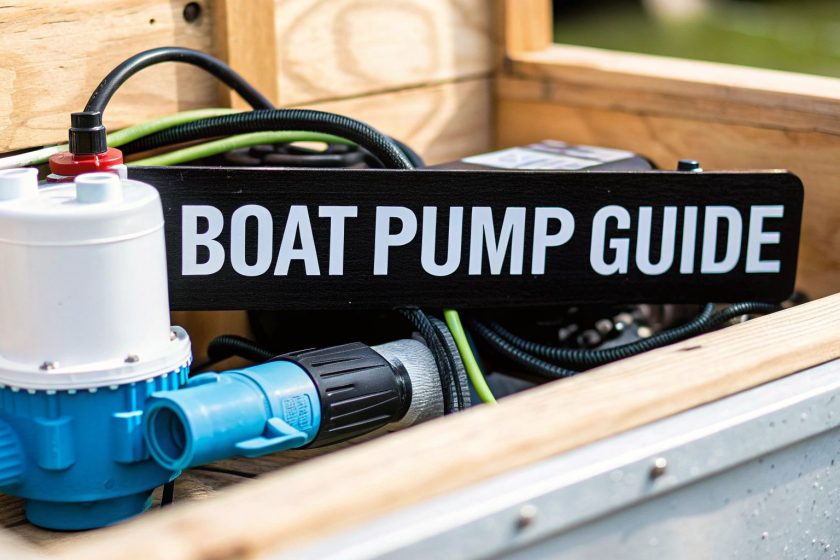
A submersible water pump 12v is a workhorse on any boat. It’s a low-voltage device designed to shift water where you need it, whether that’s draining the bilge or clearing a shower sump. Since it runs off your boat’s battery, it’s an essential bit of kit for marine plumbing and, more importantly, your safety.
For quotes and bookings, call or email us here.
How to Select the Right 12V Submersible Pump
Picking the right 12V submersible water pump isn’t just about grabbing one off the shelf. It’s a crucial decision for your boat’s day-to-day running and safety. Forget just looking at the price tag for a moment; what really counts is matching the pump’s performance to the job you need it to do.
Our team has seen it all, and we can help you figure out exactly what your vessel requires. Whether it’s a small pump for a galley sink or a high-capacity beast for emergency bilge draining, getting the right match is everything.
Matching Flow Rate and Head Height to Your Needs
When you’re comparing pumps, the two specs that matter most are flow rate and head height.
Flow rate, measured in Litres Per Hour (LPH), tells you how much water the pump can shift. A small pump for a shower sump has very different needs to an emergency bilge pump, where speed and volume are critical.
Just as important is the head height. This is the maximum vertical distance the pump can push water. Our engineers will measure from where the pump sits in the bilge or tank right up to the outlet point above the waterline. An incorrect assessment can lead to a pump that struggles to push water out, or doesn’t work at all.
This diagram breaks down how flow rate, depth, and power draw should guide you to the right pump from our range.
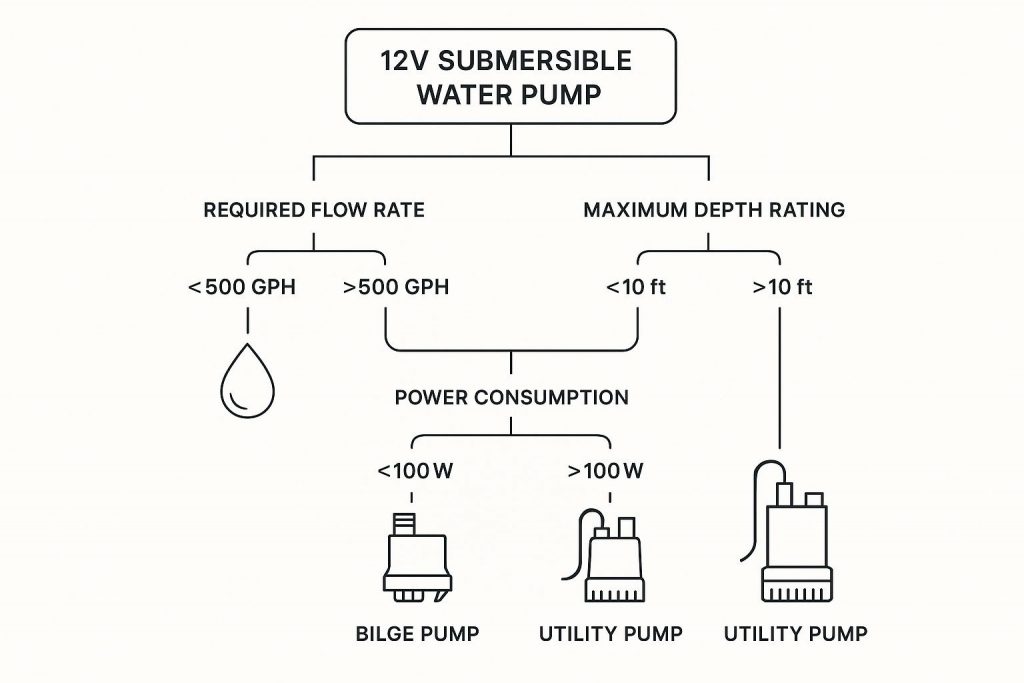
It’s a simple visual guide to help you narrow things down based on what your boat actually needs.
Our Recommended 12V Submersible Pumps
To make things easier, we’ve highlighted our leading 12V submersible pump models below. This should help you find the perfect match for your boat’s specific needs, whether you’re outfitting a small day-sailer or a larger liveaboard.
|
Pump Model |
Ideal Application |
Flow Rate (LPH) |
Max Head (m) |
Standout Feature |
|---|---|---|---|---|
|
Whale Supersub |
Bilge, Shower Sump |
650 – 1100 |
2.0 |
Ultra-low profile for tight bilge spaces |
|
Rule-Mate 500 |
Automatic Bilge Pumping |
1890 |
3.0 |
Built-in float switch for automated operation |
|
Seaflo 750 |
General Purpose & Emergency |
2838 |
3.5 |
Excellent balance of power and affordability |
|
SPX Johnson L450 |
Compact Bilge & Livewell |
1700 |
3.2 |
Removable cartridge motor for easy cleaning/service |
Every pump in our lineup is chosen for its reliability and performance in real-world marine conditions. We stand by these models because we know they deliver when it counts.
Engineered for the Harshest Marine Environments
Any pump on a boat has to be tough. In the UK, a submersible water pump 12V is an essential tool that needs to withstand a harsh life at sea, running reliably from a standard 12V DC battery.
The models we supply are built for this. Some have motor lifespans of up to 400 hours, which can be double what you’d get from other pumps on the market. They are designed for serious use.
A pump’s reliability is tied directly to how it’s built. That’s why we only stock pumps with corrosion-resistant housings and fully waterproof seals. They’re made to stand up to saltwater, engine vibration, and the constant motion of a vessel.
This focus on build quality means you get a dependable, high-performance pump that’s built to last. A quality water system is just as fundamental to your comfort and safety as a reliable heater. If you’re looking to upgrade your boat’s overall comfort, you might also want to look at our guide on Autoterm diesel heaters.
By choosing from our hand-picked range, you’re not just buying a pump; you’re making a sound investment in your boat’s operational integrity.
Why Professional Pump Installation Matters
A high-quality submersible water pump 12V is a great starting point, but its real-world performance and lifespan hinge entirely on the quality of the installation. The marine environment is brutal. Constant movement, dampness, and corrosive saltwater throw unique challenges at any piece of kit, and a pump is no exception. An improper installation can lead to poor performance and create serious safety hazards.
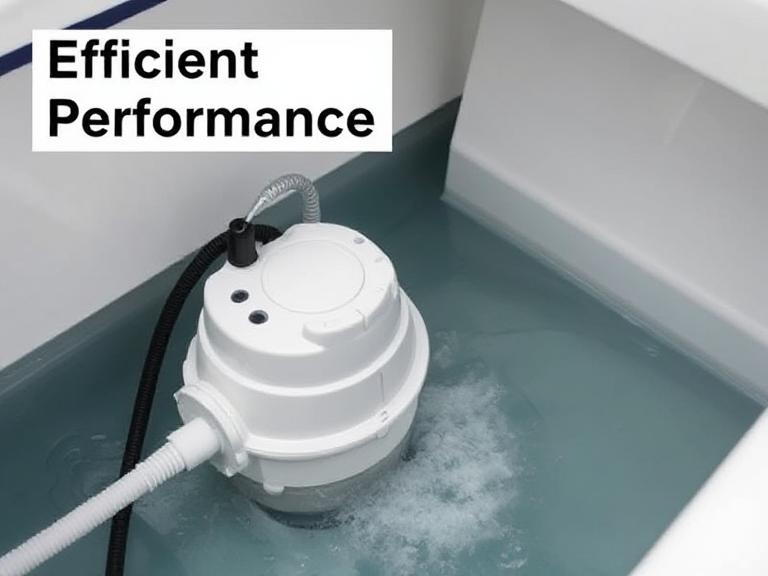
This is precisely why we have our certified marine engineers handle every installation. We’ve seen what can go wrong, and our process is built around guaranteeing safety and reliability. It’s about protecting your investment and ensuring your boat stays safe.
The Foundation of a Reliable System
It all starts with getting the placement right. Our technicians will find the sweet spot – the absolute lowest part of the bilge. Positioning the pump here ensures it can suck out the maximum amount of water and, crucially, prevents it from getting an airlock. An airlock is when a pump runs dry, which will quickly cause it to overheat and fail.
Next, we turn our attention to the wiring, which is where many installations fall short. We only use marine-grade, tinned copper wiring and proper waterproof, heat-shrunk connectors. There are no shortcuts here. This approach is vital to prevent two huge risks:
Voltage Drop: Using wire that’s too thin or not up to the job means the pump won’t get the power it needs. This results in sluggish performance and will eventually burn out the motor.
Fire Hazard: Any dodgy connection exposed to bilge water is a recipe for a short circuit. On a boat, that’s a massive fire risk you simply can’t afford to take.
A professional installation isn’t just about hooking up a pump so it switches on. It’s about building a complete, safe, and dependable system you can count on when the weather turns. Our engineers make sure every single part, from the wiring right down to the fuse, is correctly specified and fitted to the highest marine safety standards.
Ensuring Seamless and Safe Operation
Beyond the core connections, a proper job includes the critical safety features. For every pump we fit, we install a correctly rated fuse or circuit breaker. This small but essential component protects the pump motor and your boat’s entire electrical system from dangerous power surges.
When it comes to bilge pumps, we always recommend fitting an automatic float switch. Our engineers take the time to position these switches perfectly, so they trigger the pump at just the right water level. This gives you automated protection against flooding, providing real peace of mind, especially when you’re not on board.
By leaving the installation to our qualified team, you sidestep common mistakes and ensure your submersible water pump 12V works exactly as the manufacturer intended. We don’t just shift boxes; we provide complete solutions that deliver safety and performance you can rely on out on the water.
The Value of a High-Quality Marine Pump
When you’re out on the water, a pump isn’t just another bit of kit; it’s a vital piece of equipment for both safety and simply keeping things running smoothly. Skimping on a pump is a recipe for disaster. Investing in a top-notch, reliable submersible water pump 12V is genuinely one of the smartest moves any boat owner in the UK can make. A cheap, flimsy pump is just a breakdown waiting for the worst possible moment to happen.
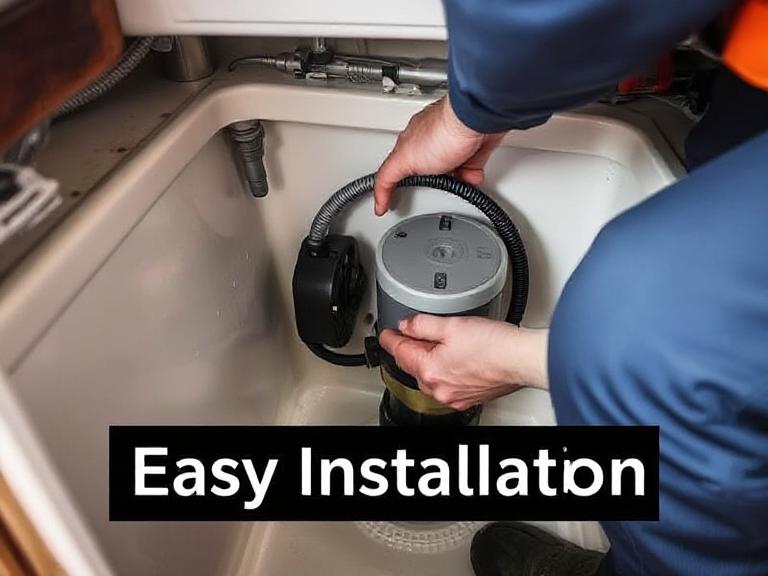
The marine environment is brutal. You’ve got constant engine vibration, the ever-present threat of saltwater spray, and the damp, humid conditions of a bilge. It’s a seriously hostile place for any mechanical device. This is precisely why your standard, off-the-shelf pump just won’t cut it for long.
Choosing a quality pump isn’t an expense; it’s an investment in your vessel’s safety and your own peace of mind. The pumps we supply are not just products; they are engineered solutions designed specifically for the challenges of life on the water.
Our dedication to quality means we’ve hand-picked every pump in our collection to stand up to these harsh realities. We specifically look for models with tough construction, corrosion-resistant materials, and fully sealed, waterproof motors. This focus on durability is what stops a pump from failing prematurely and keeps it performing when you need it most.
Engineered for Longevity and Performance
The pumps we stock have been chosen for their advanced engineering, which translates directly into a longer life and better performance. You’re not just buying another component; you’re investing in technology that’s been designed to give you reliable service, year in and year out.
This reflects a wider trend we’re seeing across the UK. The national water pump market, valued at roughly USD 2,293.54 million in 2023, is set to grow quite a bit. This growth is being pushed by people demanding more durable, sustainable, and modern ways to manage water. If you’re interested in the nuts and bolts of it, you can dive into the market trends in this detailed report on Credence Research.
Our selection of pumps is a direct response to this demand for higher standards. We provide appliances that offer:
Superior Materials: Housings and impellers are made from materials that laugh in the face of saltwater corrosion and impacts.
Sealed Motors: These aren’t just any motors. They are high-efficiency units, completely protected from water getting in, which prevents short circuits and burnout.
Vibration Resistance: Built to handle the constant shudder and movement of a working boat without falling to bits.
By choosing a high-quality submersible water pump 12V from our carefully selected range, you’re equipping your boat to handle whatever the elements can throw at it. It’s the smart choice for any boat owner who puts a premium on reliability, safety, and long-term value.
Extending the Life of Your 12V Water Pump
Any seasoned boater knows that regular maintenance is the secret to getting a long and reliable life out of your gear. Your submersible water pump 12V is no different. Professional care really does go a long way, especially when it comes to preventing failures when you’re miles from shore. We get it – you need every single component on your vessel to be dependable, and that absolutely includes your water pump.
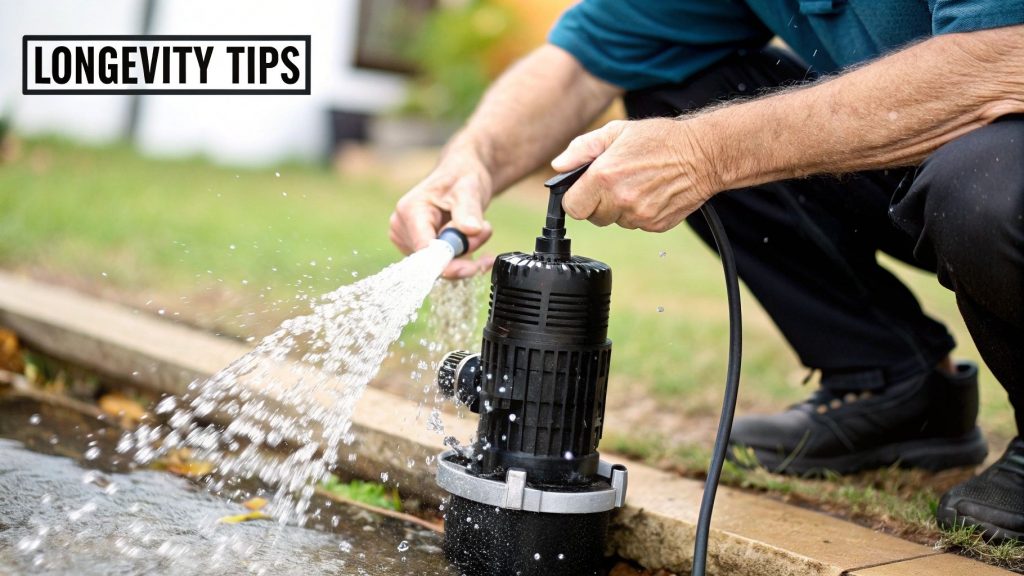
That’s why we always push the importance of routine professional servicing. These checks are crucial for keeping your pump in top condition and making sure it’s ready to go when you need it most.
Key Areas for Routine Inspection
Even the best pump needs attention from a qualified professional. The damp, often cramped, bilge area is a harsh environment for any piece of kit, and small issues can escalate if not caught early.
A professional inspection can spot trouble before it turns into a real headache. Our engineers pay close attention to these key areas:
Intake Strainer: Think of the strainer or filter at the base of the pump as its first line of defence. It’s there to stop hair, grit, and other gunk from destroying the impeller. We check and clear this strainer to keep water flowing freely. A clogged strainer is one of the most common and easily preventable pump problems.
Wiring and Connectors: In the damp marine environment, corrosion is a constant battle. Our team will inspect all wiring for any signs of degradation, especially around connectors and terminals. A corroded connection builds up electrical resistance, which makes the pump work harder and can eventually lead to burnout.
Pump Operation: We don’t just assume a pump is working. During servicing, we activate the pump and listen for any unusual grinding or rattling sounds. These noises are often a dead giveaway for a worn impeller or some debris rattling around inside the housing, which we can then address.
Preventing a failure is always better than reacting to one. Our professional maintenance services are your best strategy for ensuring your water management system is always ready for action, just like a well-maintained engine or heating system.
When to Call in the Professionals
While regular visual checks by the owner are useful, some issues absolutely need an expert eye. If you’re dealing with persistent problems like the pump cycling on and off for no reason, or you’ve spotted serious corrosion on the wiring, it’s time to call our service team. Trying to sort out complex electrical faults without the right gear and knowledge isn’t just difficult – it can be downright dangerous.
Our certified marine engineers are kitted out to handle these more advanced diagnostics. We can accurately test for voltage drops, inspect internal components for wear, and make sure your entire system, including automatic switches and alarms, is working perfectly. This level of service is vital for more complex setups, especially those integrated with other systems like our reliable Morco boilers and water heaters.
We don’t just sell and install; we’re here to provide the ongoing support that keeps your vessel safe and fully operational. For some extra general advice, you might find this residential sump pump maintenance guide offers some useful, similar principles. Trusting your maintenance to our team means you can get back to enjoying your time on the water, knowing your boat’s vital systems are in expert hands.
Troubleshooting Common Pump Problems
Even the most dependable submersible water pump 12v can start acting up. After all, the marine environment is a tough place to live and work. Figuring out what the symptoms mean is the first step, but knowing when to call in a professional is what really matters for your boat’s safety and the pump’s lifespan. Tackling a complex repair without the right know-how often creates a much bigger, and more expensive, problem.
A classic issue we hear about all the time is a pump that’s clearly running, but not a drop of water is moving. This usually points to an airlock or a blockage in the intake or outlet hose. While a quick visual check for obvious debris is a good first step, a persistent problem requires a technician’s trained eye and diagnostic tools.
Common Symptoms and What They Mean
When your pump starts misbehaving, it’s usually trying to tell you something. If you can recognise the signs, you can explain the problem accurately to our engineers, which means we can get to the root of it much faster.
Here are a few scenarios we see on a regular basis:
Pump Won’t Switch On: While a tripped breaker or blown fuse can be the cause, if they appear fine, the fault could be deeper in the wiring, the switch, or the motor itself. That’s when you need professional tools to diagnose it safely.
Intermittent Cycling: A pump turning on and off for no apparent reason could indicate a faulty float switch or a leaky non-return valve allowing water back into the bilge.
Loud or Grinding Noises: Any unusual racket often means debris has managed to get past the strainer and is now caught in the impeller. Letting the pump run like this can quickly cause serious damage, so it’s best to have it professionally inspected.
Don’t let a small pump issue spiral into a major headache. Our professional diagnostic services are designed to accurately pinpoint the root cause of any fault, saving you the guesswork and ensuring a safe, reliable repair every time.
The Value of Expert Diagnostics
The technology inside a modern submersible water pump 12v is surprisingly robust, which makes sense given how critical these devices are. In fact, the wider European market for electric submersible pumps, which includes our marine 12V models, was valued at over USD 3.3 billion in 2023. This market is driven by some very demanding applications, which just goes to show how important dependable equipment is. You can read a full analysis of the European ESP market growth on GMI Insights.
Our certified marine engineers are fully equipped to service this advanced technology. We don’t just put a plaster on the symptom; we find and fix the underlying cause. It could be anything from a dodgy electrical connection or a worn-out internal part to an issue with the pipework connected to it.
Proper diagnostics are just as vital for other systems, like your gas lines, which is why we also offer expert advice on essential components like our high-quality LPG gas hose. When you entrust your pump problems to our team, you’re making sure your entire water system is safe, efficient, and ready to go when you need it most.
Got Questions About Our 12V Pumps?
When you’re dealing with marine equipment, it’s natural for questions to pop up. Here at Marine Heating Solutions, our experts have pretty much heard them all. We’ve put together some straightforward answers to the most common queries we get about choosing and using a submersible water pump 12V on a boat.
Our aim is to give you the clarity and confidence to pick the right pump, understand how it works, and make sure your vessel is safe and reliable.
How Long Will My 12V Pump Last?
This is one of the first things people ask, and for good reason. With a professional installation and the expert maintenance we provide, you can expect many years of dependable service from our high-quality marine pumps. The models we stock are specifically chosen because they’re built for the tough realities of life at sea.
The motor life in many of the pumps we feature is rated for over 400 hours of continuous operation. That’s not just an abstract number; it’s a testament to their durability and long-term performance, giving you a pump you can count on, season after season.
Can Any Pump Be Made Automatic?
Yes, most of the submersible pumps in our range are fully compatible with automatic float switches. For any bilge application, we believe this is an essential safety feature you shouldn’t be without. Automating your pump provides a crucial, hands-free defence against taking on water.
This is where a professional installation really shows its worth. We don’t just connect the switch; our certified marine engineers make sure it’s positioned perfectly within the bilge. This guarantees it kicks in at exactly the right water level for responsive, reliable protection, giving you complete peace of mind.
What Is the Typical Power Draw?
Knowing how much power a pump uses is crucial for managing your boat’s electrical system. The power draw of a submersible water pump 12V, measured in amps, is directly linked to its size and pumping capacity.
Smaller Pumps: A compact model, maybe for clearing a shower sump, will typically draw a modest 2 to 4 amps.
High-Capacity Pumps: The bigger, more powerful pumps designed for shifting a lot of water from the bilge can pull between 10 to 15 amps when they’re running.
We provide detailed technical specs for every single pump we sell. This helps you properly assess its impact on your 12V system and ensure you’re not at risk of overloading any circuits.
For quotes and bookings, call or email us here.